Exclusive: Houthi Military Moves Signal Red Sea Escalation Ahead of Shipping Threats
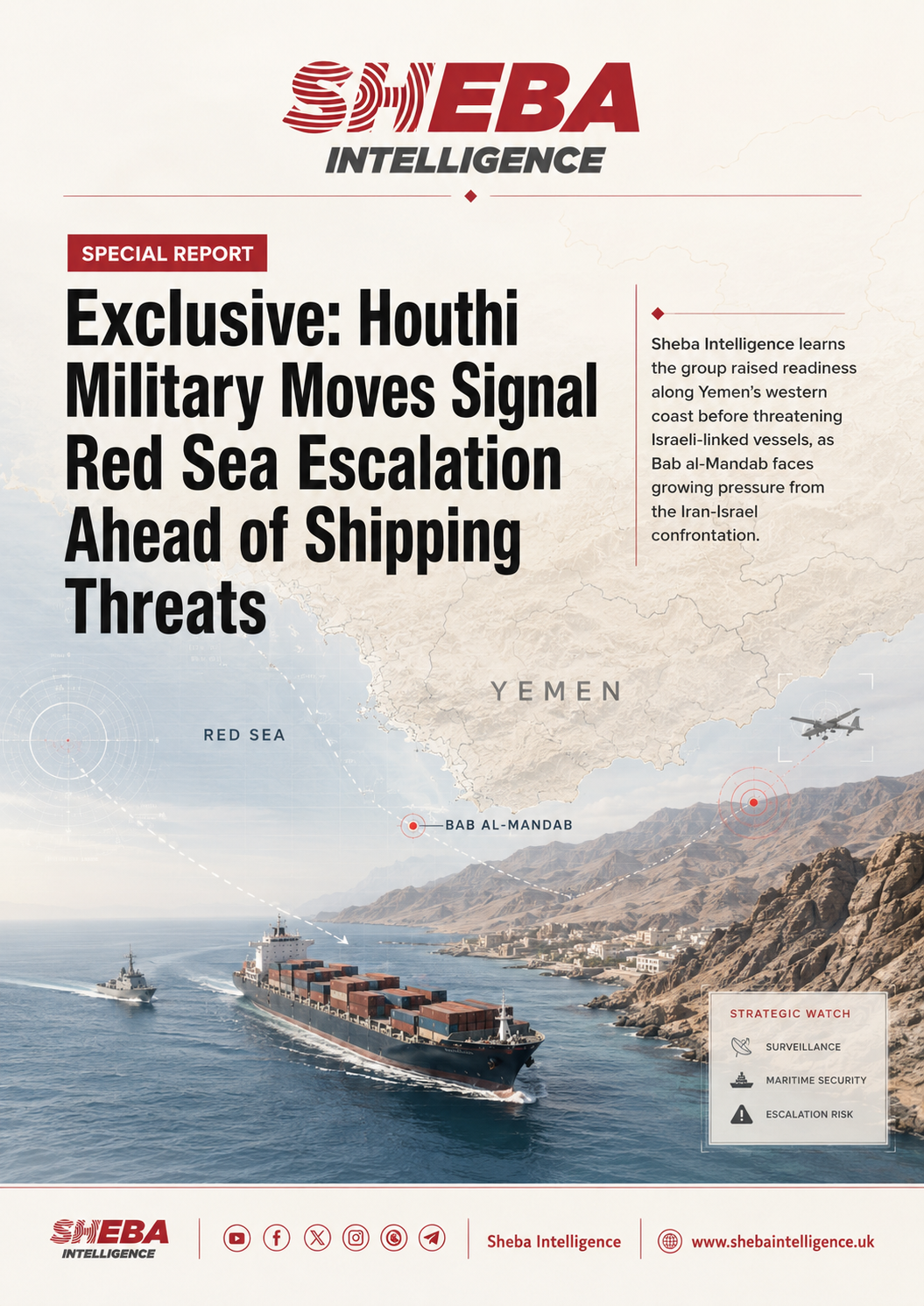
Exclusive information obtained by Sheba Intelligence indicates that the Houthi group raised its military readiness along Yemen’s western coast and in Hajjah governorate hours before announcing missile attacks and threatening Israeli-linked shipping in the Red Sea.
The movements suggest that Yemen’s western coastline is being positioned as part of the wider pressure campaign surrounding the Iran-Israel confrontation, with direct implications for Bab al-Mandab and international maritime security.
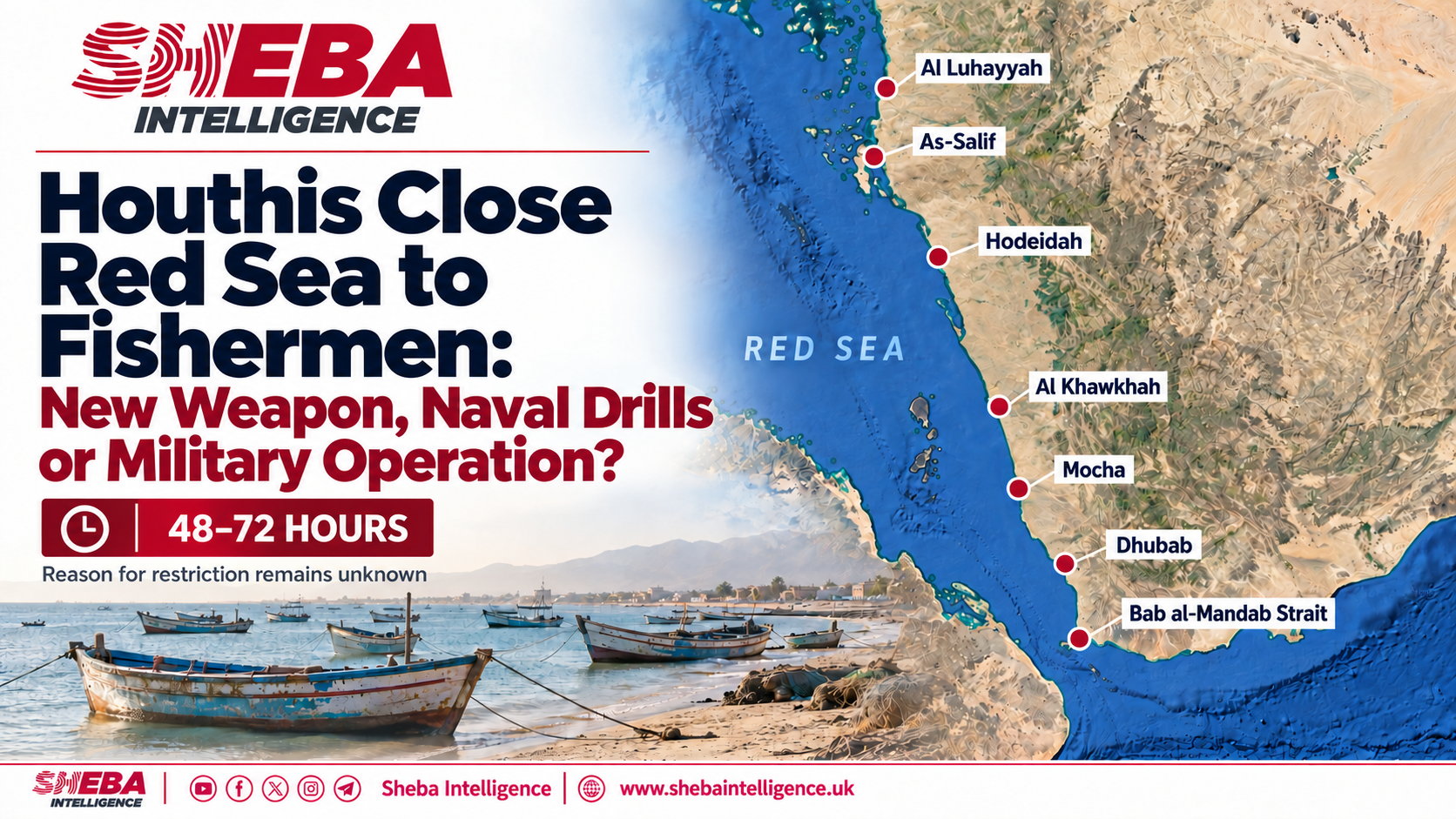
According to the information, the group recently deployed surveillance and communications systems, radar stations, and coastal defense equipment in positions overlooking the Red Sea. It also placed maritime reconnaissance radars and small electronic jamming devices in elevated coastal areas, apparently to monitor international naval vessels and commercial ships and to guide drones with greater accuracy.
The information suggests that these moves are part of preparations to threaten navigation through Bab al-Mandab, or at least raise the cost of securing passage through the strait. The pattern appears consistent with a broader Iranian strategy of applying pressure on maritime chokepoints, from the Strait of Hormuz to the Red Sea and the Gulf of Aden.
Sheba Intelligence also learned that missile-launch vehicles were moved from hidden positions in Saada governorate toward alternative deployment areas, as the group raised its readiness to carry out military tasks should orders be issued through what sources described as an operations structure linked to Iran’s regional network of allied groups.
The Saudi announcement that a ballistic missile launched from Yemen had fallen in an uninhabited area near the Saudi-Yemeni border gives the Houthi escalation an additional regional dimension. According to Saudi Arabia’s Ministry of Defense, technical reviews indicated that the missile had been intended for a regional country. Although the incident caused no casualties or damage, it underscores the danger that expanded Houthi missile activity could generate unintended consequences beyond Yemen’s maritime theater, especially if launches aimed at distant targets veer off course or are misidentified in a highly tense regional environment.
The movements came shortly before the Houthis announced missile attacks on Israeli targets and threatened to block navigation for vessels linked to Israel in the Red Sea. The announcement provides political cover for possible maritime escalation, while increasing the risk that the Red Sea could become a more direct arena in the widening confrontation between Iran and Israel.
The danger lies in the fact that the Houthis are no longer acting solely as a local actor in Yemen’s war, but as a regional pressure tool capable of threatening one of the world’s most important maritime routes. A threat to Bab al-Mandab, combined with heightened tensions around the Strait of Hormuz, would place global trade and energy flows under dual pressure and could increase the likelihood of international military intervention to protect shipping.
According to information obtained by Sheba Intelligence, the Houthi moves are also accompanied by signs of an attempt to expand the maritime threat toward the Gulf of Aden and the Horn of Africa. These concerns include possible contacts with armed or criminal networks operating near Somalia’s coast, some of which have been linked by regional security sources to extremist or piracy activity. Such a development could turn the maritime threat into a cross-shore challenge spanning both the Yemeni and African sides of the route.
Observers believe the Houthi announcement is aimed at reasserting the group’s position within Iran’s regional axis, increasing its negotiating value with regional and international actors, and diverting attention from mounting internal crises in areas under its control.
However, any miscalculation in identifying vessels, any missile failure, or any attack on an international naval asset could trigger a broader U.S. or Israeli response inside Yemen and push the country back to the forefront of regional escalation — not merely as a domestic conflict zone, but as a central node in the security of the Red Sea and Bab al-Mandab.
The latest developments suggest that the Houthi announcement was not merely a political statement. Rather, it followed field movements that indicate a readiness to use Yemen’s geography as a pressure card in the Iran-Israel confrontation, with direct implications for international maritime security and regional stability.