Exclusive: Yemen Reinforces Frontlines as Houthis Expand Drone and Missile Deployments Following U.S. Backing for Saudi Arabia
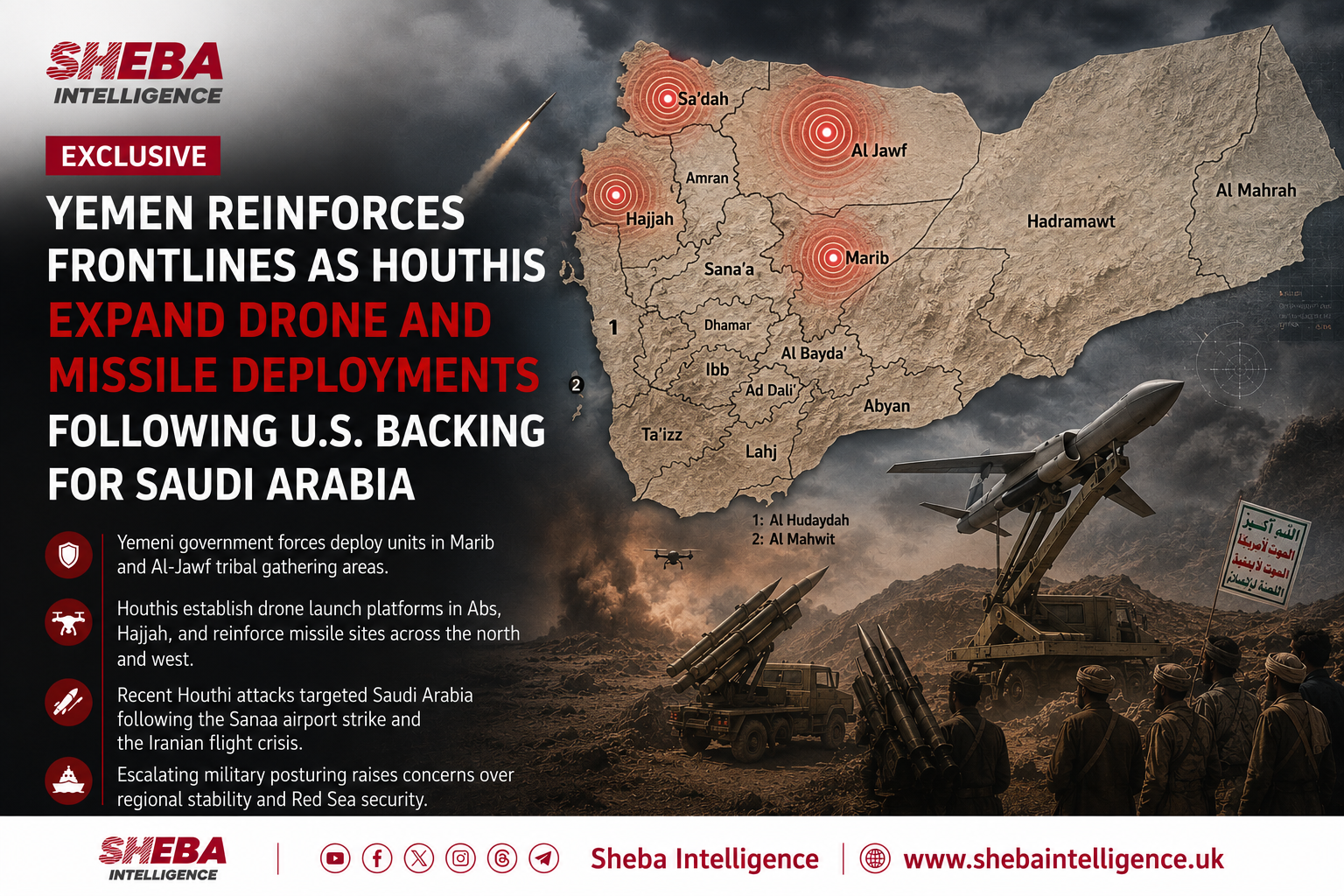
Yemeni government forces have begun reinforcing key frontlines with the Houthis as regional tensions continue to escalate following reports that the United States has reaffirmed its support for Saudi Arabia against Iran-backed Houthi attacks.
According to Sheba Intelligence sources, units from the Nation Shield Forces have been deployed to frontline positions in Marib, while additional Emergency Forces have been positioned around the tribal gathering in Al-Rayyan, Al-Jawf, where tribal mobilization against the Houthis has intensified in recent weeks.
On the opposing side, the Houthis have accelerated military preparations across northern and western Yemen. Sources indicate the group has established drone launch platforms in Abs District, Hajjah Governorate, overlooking the Red Sea corridor, while continuing to reinforce missile and drone positions across strategic areas facing both Saudi Arabia and the Red Sea.
These deployments follow what Sheba Intelligence previously documented as a broader Houthi military build-up along Yemen’s northern frontier and western coast, including the deployment of long-range ballistic missiles near the Saudi border and preparations that could support attempts to threaten maritime traffic through Bab al-Mandab.
The latest movements also come days after the Houthis launched coordinated ballistic missiles and drones from Saada, Amran, and Al-Jawf toward Saudi Arabia following the strike on Sanaa International Airport, which was intended to prevent an Iranian aircraft from landing. Reports indicated the flight was suspected of carrying sensitive military technologies, weapons components, Iranian experts, in addition to Houthi pilgrims. Those launches demonstrated that the Houthis had already activated operational launch sites prepared across multiple governorates.
Earlier investigations by Sheba Intelligence also revealed persistent Iranian and Houthi efforts to reactivate the Tehran–Sanaa air bridge after increasing pressure on maritime smuggling routes in the Red Sea and Gulf of Aden. Intelligence indicated that growing interdiction of weapons shipments at sea had pushed Tehran and the Houthis to seek alternative aerial supply routes capable of transferring personnel and high-value military cargo.
The military deployments on both sides, combined with Washington’s public reaffirmation of its commitment to Saudi Arabia’s security and the renewed Iranian logistical efforts, suggest that Yemen is entering a new phase of military escalation in which ground, air, and maritime theaters are becoming increasingly interconnected. While neither side has announced a large-scale offensive, the current force posture indicates preparations for contingencies that extend beyond localized confrontations and could affect the broader Red Sea security environment.