
Federal Somalia Moves to Consolidate SSC-Khaatumo as Somaliland Expands Security Ties with the United States
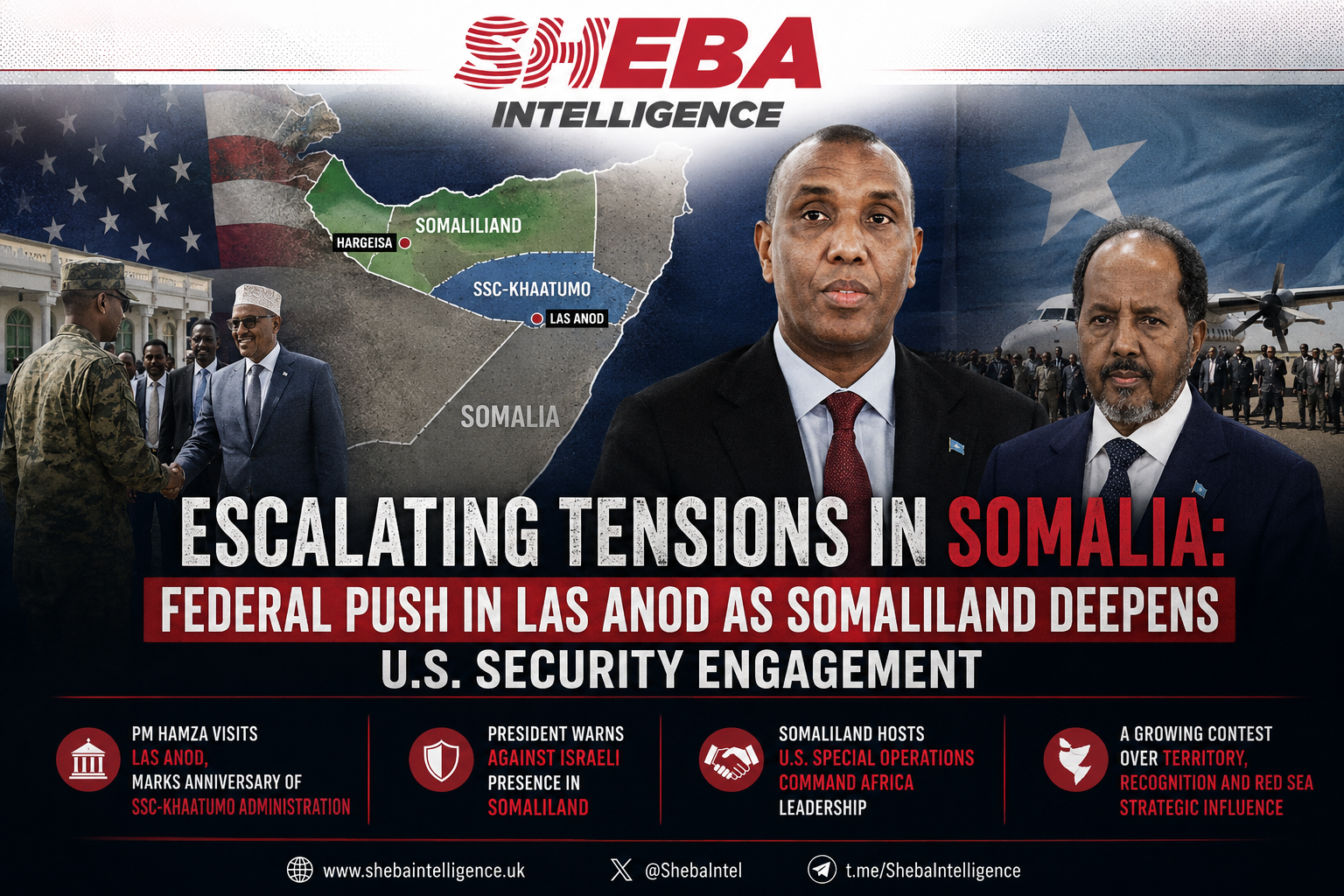
Mogadishu has intensified efforts to reinforce its authority in the disputed SSC-Khaatumo region, while Somaliland is simultaneously strengthening security engagement with the United States, highlighting an increasingly geopolitical contest over the Horn of Africa and the Red Sea.
Somali Prime Minister Hamza Abdi Barre arrived in Las Anod, the capital of SSC-Khaatumo, to attend celebrations marking the administration’s first anniversary and to launch a series of federal government development projects and public services.
The visit, accompanied by several cabinet ministers, represents the highest-level federal engagement with SSC-Khaatumo since the administration was established. It underscores Mogadishu’s determination to integrate the region into Somalia’s federal system following Somaliland’s loss of control over Las Anod after the 2023 conflict.
Prime Minister Barre emphasized the federal government’s commitment to national unity and pledged continued political and institutional support for SSC-Khaatumo, signaling that Mogadishu now considers the administration an integral component of Somalia’s state structure rather than a temporary political arrangement.
The visit coincided with a strong address by Somali President Hassan Sheikh Mohamud, who warned that Somalia would combine “strength and wisdom” to prevent Israel from establishing a foothold or expanding its influence in Somaliland.
Speaking before the opening session of the new federal parliament, the president reaffirmed that Somalia would oppose any external arrangements affecting its sovereignty or territorial integrity, stressing that protecting national unity remains a non-negotiable priority.
U.S. Security Engagement in Somaliland
At nearly the same time, Somaliland President Abdirahman Mohamed Abdullahi (Irro) hosted a U.S. delegation led by the Commander of U.S. Special Operations Command Africa (SOCAFRICA) in Hargeisa.
According to Somaliland authorities, discussions focused on security cooperation, the Red Sea, the Gulf of Aden, and broader stability across the Horn of Africa.
The visit formed part of a wider regional tour that included Kismayo and was expected to continue to Bosaso, reflecting Washington’s expanding operational engagement with regional administrations along the Gulf of Aden amid growing maritime security concerns.
Although no public evidence indicates that the U.S. visit directly triggered Mogadishu’s latest political moves, its timing has heightened sensitivities within the federal government, particularly as Somaliland continues to pursue broader international security partnerships.
Background: A Growing Internal Challenge to Somaliland’s Secession Project
The latest developments reinforce a trend previously identified by Sheba Intelligence: Somaliland’s greatest strategic challenge is no longer limited to the lack of international recognition but increasingly stems from expanding domestic opposition within territories it claims.
As reported earlier by Sheba Intelligence, the emergence of SSC-Khaatumo fundamentally altered the political landscape in northern Somalia. The administration was formed after Somaliland lost control of Las Anod and surrounding districts, creating a federal-aligned authority inside territory previously administered by Hargeisa.
Unlike previous disputes centered solely on Mogadishu’s rejection of Somaliland’s independence, the current confrontation involves organized local administrations, traditional clan leadership, and armed forces openly rejecting Somaliland’s rule from within the contested regions.
Sheba Intelligence also previously reported that opposition to Somaliland extends beyond SSC-Khaatumo. Political movements and influential clan leaders in the Awdal region have increasingly challenged Hargeisa’s political dominance, advocating either greater autonomy or continued participation within Somalia’s federal system.
This emerging pattern places Somaliland under pressure from both its eastern and western peripheries while simultaneously strengthening Mogadishu’s strategy of supporting alternative regional administrations rather than relying solely on diplomatic opposition.
The federal government’s decision to elevate SSC-Khaatumo through high-level political visits, institutional integration, and development initiatives appears designed to consolidate these gains and further erode Somaliland’s territorial claims.
At the same time, Somaliland is seeking to offset growing internal pressure by expanding international security cooperation, particularly with the United States, while highlighting its strategic position overlooking the Gulf of Aden and the Bab el-Mandeb Strait.
Taken together, the developments suggest that the dispute over Somaliland is evolving beyond a debate over diplomatic recognition into a broader geopolitical competition involving regional security, Red Sea maritime interests, and competing efforts to shape the future political order of the Horn of Africa.