
Iran Moved Experts Linked to Sensitive Programmes to Yemen, Sources Say
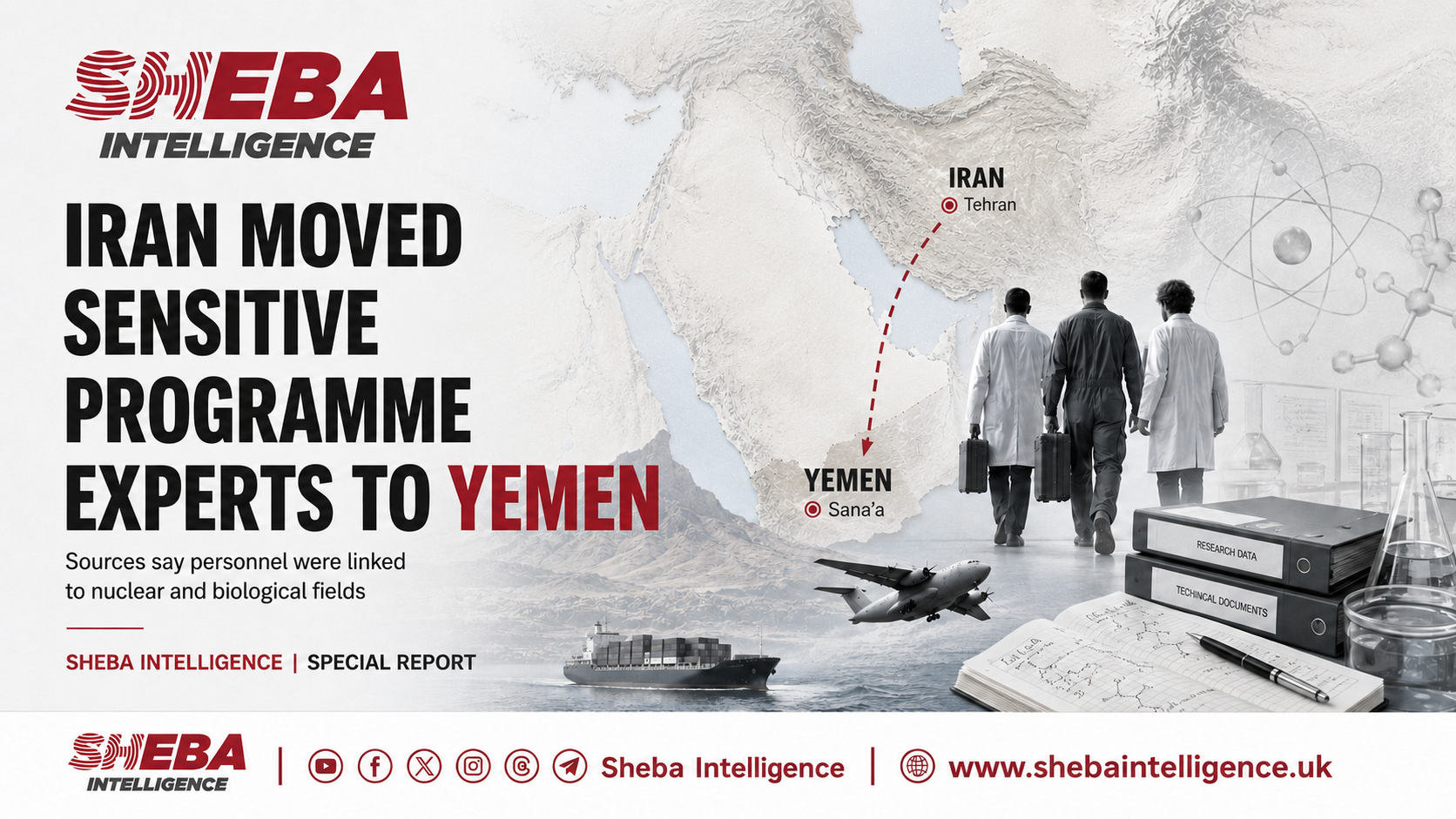
The personnel were reportedly connected to Iranian military programmes, including nuclear and biological fields, and reached Houthi-controlled territory through multiple routes.
Iran has transferred a group of scientists and specialists associated with sensitive military programmes, including nuclear and biological fields, to Houthi-controlled Yemen, informed sources told Sheba Intelligence.
The transfers reportedly took place in the months following the start of the large-scale US-Israeli campaign against Iran on February 28, 2026, as Tehran sought to protect personnel considered vulnerable to targeted strikes.
The sources did not disclose the number or identities of those transferred, nor did they establish whether their presence in Sana’a is temporary or linked to technical assignments supporting Houthi capabilities.
Lessons From Hezbollah
According to the sources, Iran drew on methods previously used by Hezbollah to conceal and relocate personnel following the severe security breaches and Israeli targeting campaign against the group in Lebanon.
Thousands of pagers and handheld radios used by Hezbollah members exploded across Lebanon on September 17 and 18, 2024. The operation was followed by an intensified Israeli campaign against the group’s leadership and military infrastructure.
The sources said the experience helped develop procedures involving intermediaries, alternative documents, indirect travel and compartmentalised routes designed to reduce the risk of tracking.
Sheba Intelligence could not independently identify the Hezbollah figures reportedly moved through these networks or confirm the group’s direct role in the latest transfers to Yemen.
Multiple Routes Into Sana’a
The specialists are believed to have reached Sana’a through several air, sea and land routes rather than through a single coordinated movement.
Some may have travelled aboard United Nations-operated flights to Sana’a, according to the sources, amid allegations that humanitarian air movements were exploited to carry undeclared passengers and equipment.
Sheba Intelligence previously reported unusually heavy traffic involving five aircraft arriving in Sana’a in one day, followed by a large cargo aircraft the next morning. Dr Abdulqader Al-Kharraz later told the platform that foreign specialists, communications equipment and drone-related systems had entered Houthi-controlled territory through some of these flights.
The allegations do not establish that the United Nations knew of or participated in any misuse of its operations. They do, however, raise questions about passenger and cargo screening and the ability of outside actors to exploit humanitarian channels.
Other specialists reportedly arrived aboard smuggling vessels or ships calling at Houthi-controlled ports in Hodeidah. The long western coastline, dispersed landing points and established maritime smuggling networks make it possible to move personnel and compact equipment outside formal port procedures.
A third route reportedly ran from Oman into Yemen’s eastern governorates of Al-Mahra and Hadramawt, and then toward Sana’a through internal smuggling networks. The information does not indicate involvement by the Omani authorities; it points instead to the exploitation of cross-border networks and sparsely monitored territory.
Sensitive Equipment May Have Accompanied Transfers
The sources did not rule out the possibility that advanced weapons, specialised equipment or other sensitive military materials were moved alongside the personnel.
The contents of any accompanying shipments remain unclear. Previous Sheba Intelligence reporting identified the transfer of communications systems, drone-related equipment and technology used to detect unmanned aircraft, trace their signals and locate operators or control sites.
There is currently no independently verified evidence that nuclear or biological materials were transferred to Yemen. The reported movement of personnel associated with programmes in these fields should not be treated as proof that Iran has relocated nuclear or biological weapons capabilities.
A Houthi “Future Nuclear Project”
The reported arrival of Iranian specialists coincides with an internal Houthi initiative to develop a cadre for what the group calls its “future nuclear project”.
Sources told Sheba Intelligence that the Houthis established a dedicated administration for the project and selected nearly 300 students to undergo education and training.
The selection process was reportedly tightly controlled, but the curriculum, instructors and training locations remain unknown. It is also unclear whether all instruction is taking place in Yemen or whether some participants have been sent abroad.
The information does not demonstrate that the Houthis possess an operational nuclear programme or the ability to produce nuclear material. The initiative may be educational, political or propagandistic. Its significance lies in the group’s apparent effort to build a carefully selected pool of personnel around a long-term technical ambition.
Sheba Intelligence has not established an operational link between the Iranian specialists reportedly transferred to Sana’a and the Houthi administration overseeing the project. The timing, however, warrants closer scrutiny of possible Iranian involvement in training, curriculum development or technical supervision.
What Remains Unknown
The US-Israeli campaign launched on February 28 targeted Iranian command structures, missile and drone facilities, air defences and other parts of the country’s military infrastructure. US defence officials said more than 5,000 targets were struck during the first ten days of Operation Epic Fury.
That campaign gave Tehran a clear incentive to disperse personnel whose knowledge might be difficult to replace. Yemen offers concealment, allied security structures and several established routes for moving people and equipment.
The available information does not yet reveal what the specialists are doing in Yemen, how long they are expected to remain or whether they have been assigned to Houthi military programmes.
Sheba Intelligence has been unable to independently verify their identities, the full nature of their expertise or the contents of the shipments believed to have accompanied them. The platform is continuing to track their arrival routes, locations and possible assignments.