
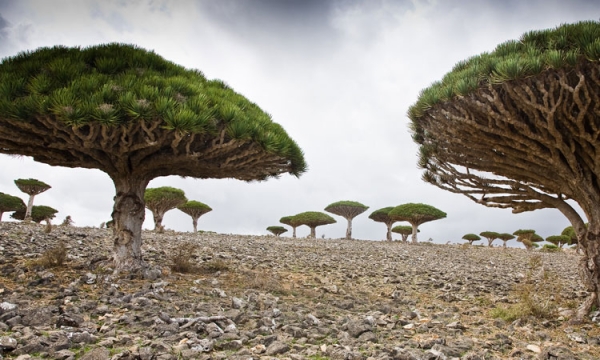
Yemen marked the International Day for Biological Diversity on May 22 amid the ongoing war and climate change consequences, which keep posing threats to the country's ecosystem.
The International Day for Biological Diversity is an occasion to raise awareness of the importance of preserving the environment and biological diversity and remind nations to take effective measures to combat the threats and dangers facing biodiversity.
While Yemen has a rich biodiversity, given its topography, including the seas, the islands, the mountains, and the plains, the war has taken a heavy toll on the country's biodiversity.
Environmental experts say that the continuation of the conflict in Yemen has hurt the environment, particularly nature reserves, leading to a decline in the number of endangered animals and plants.
Engineer Abdullah Abu Al-Futouh, Director of Biodiversity at the Environmental Protection Authority in Sanaa, said Yemen still maintains its rich biological diversity. However, he indicated that environmental challenges are constantly increasing, including assault on wildlife and the destruction of natural sites due to unsustainable human activities such as desertification, unregulated afforestation, and illegal hunting.
According to Abu Al-Futouh, such continued risks threaten many endangered plants and animals, significantly affecting the environment.
He stressed the need for government-community cooperation to preserve the valuable biological diversity and encourage environmental initiatives that enhance environmental sustainability in Yemen.
Preserving the biodiversity of Yemen has environmental and economic benefits. Abu Al-Futouh explained, "Regarding the environmental aspect, biodiversity preserves the natural balance in ecosystems and enhances their sustainability. The biological diversity works to combat desertification because rare trees are considered a barrier that prevents the spread of sand, thus contributing to maintaining environmental balance."
Regarding the economic aspect, he stated that biological diversity provides many opportunities for developing the tourism, agricultural, and industrial sectors.
Yemen's habitats contain many unique species of plants, including 71 species of wild mammals, 363 species of birds, 117 species of reptiles and amphibians, and 3,372 species of insects and spiders, 969 species of fish in the Gulf of Aden, the Red Sea, and the Arabian sea.
In 1992, Yemen signed the International Convention on Biological Diversity. It recognized the value of biological resources as an integral part of its natural heritage and an essential basis for sustainable development.
Today, climate change, particularly floods and droughts as well as the years-long war, have hurt the biological diversity in Yemen, a matter posing a danger to the country's economy and environment.