Yemeni Forces Launch Pre-emptive Strikes as Houthis Prepare New Al-Jawf Offensive
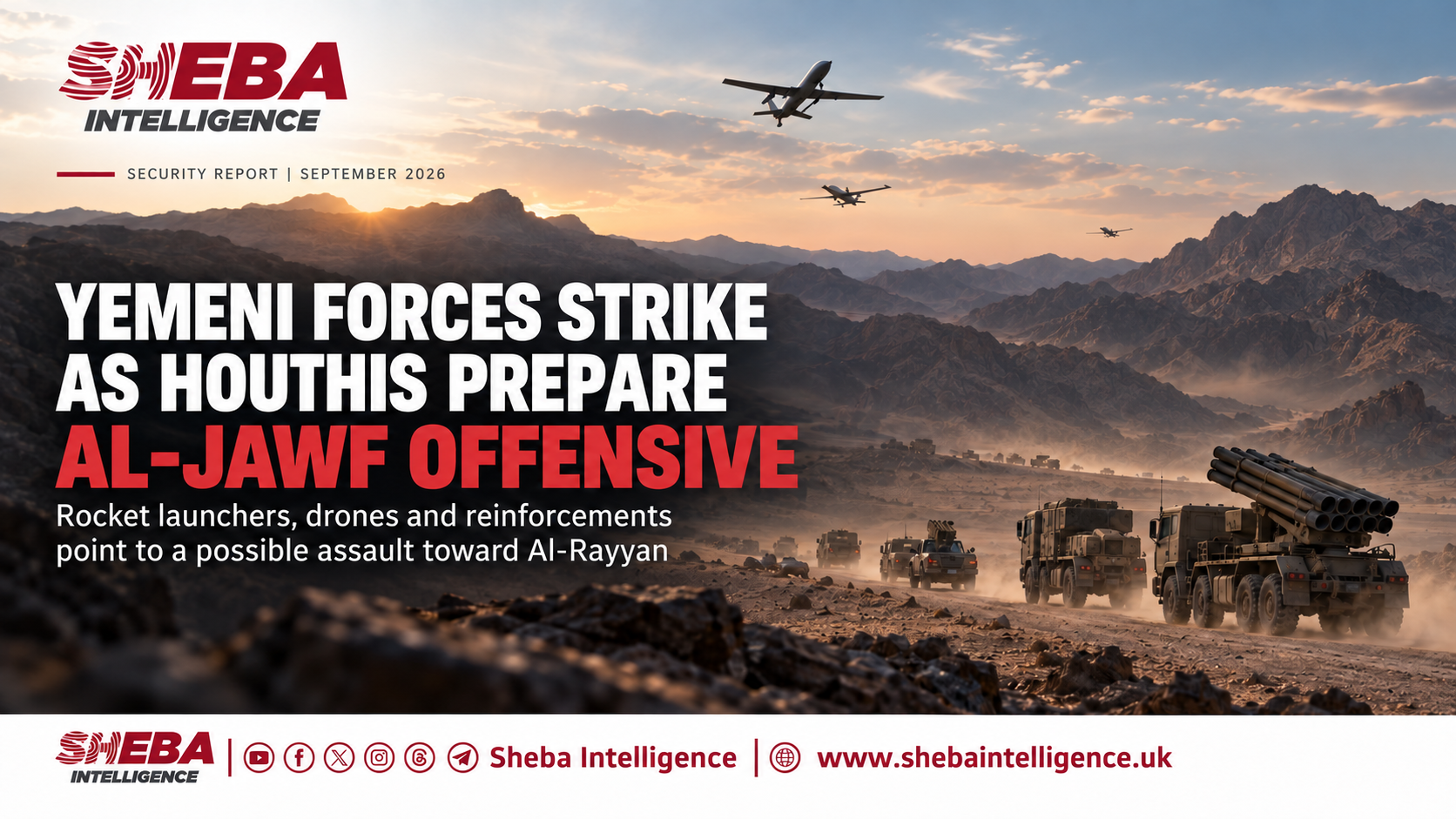
Government operations targeted Houthi movements and strategic positions as the group deployed rocket launchers, drones and reinforcements for a possible assault toward Al-Rayyan
Yemeni government forces carried out a series of intensive pre-emptive attacks on Houthi movements and strategic positions across Al-Jawf governorate on Saturday, military sources said, as the group prepared for a possible offensive toward the Al-Rayyan front.
The sources did not disclose the precise locations, weapons used or the results of the government operations. The strikes followed reports that Houthi positions, weapons depots and missile-launch sites had been targeted in Al-Jawf over the previous two days.
The operations came as the Houthis moved dozens of Katyusha rocket launchers, drones and military reinforcements into the governorate’s desert areas, according to information obtained by Sheba Intelligence.
Reinforcements were sent to Al-Labnat and Sabreen camps in Khabb wa Al-Sha’af district, as well as newly established military sites east of Al-Maraziq. The scale of the movements suggests preparations to combine rocket and drone strikes with a possible ground assault toward Al-Rayyan.
Sheba Intelligence could not independently verify the number of troops and weapons deployed or determine when an offensive might begin.
Expanding the Battlefield
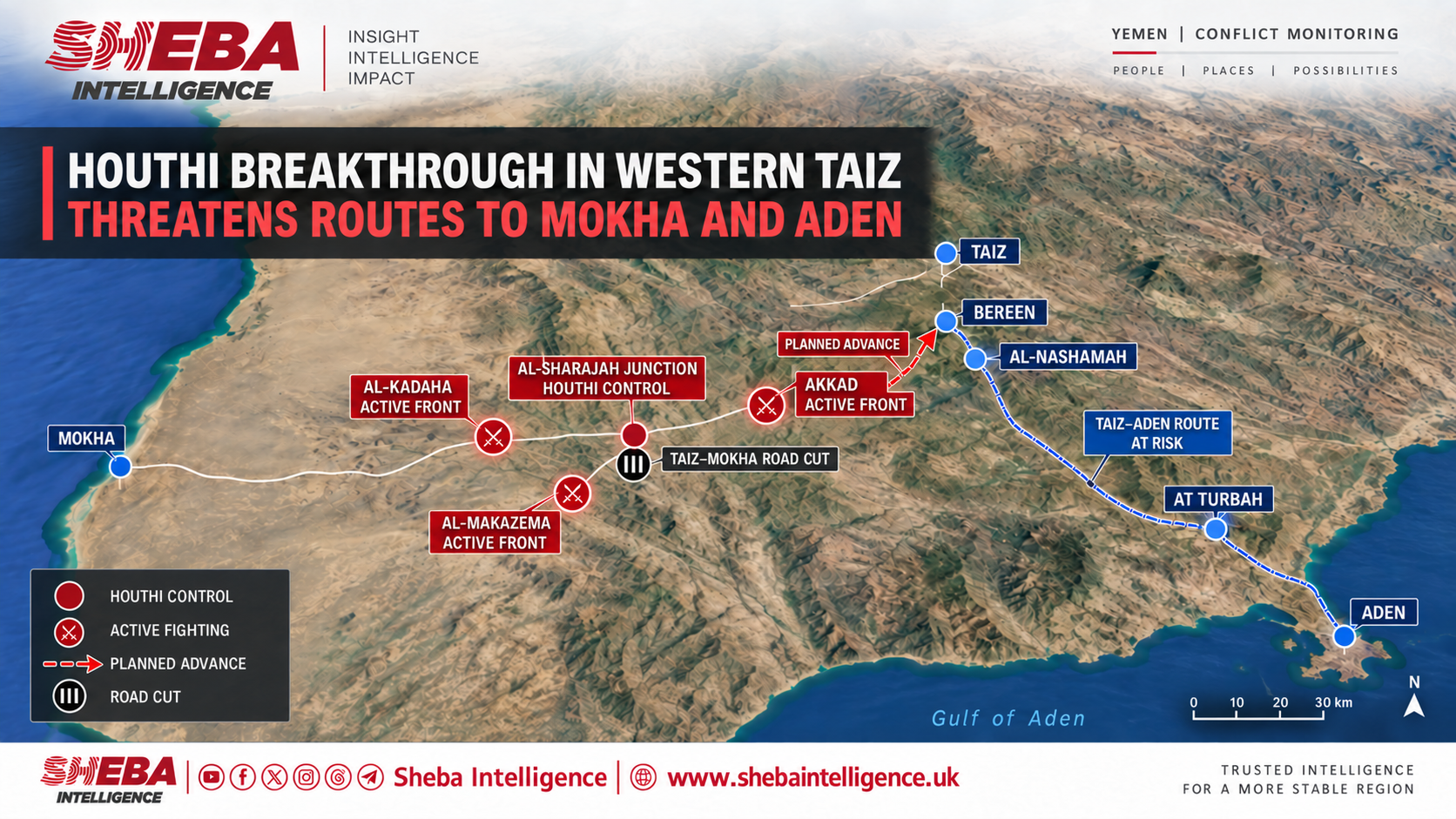
The Al-Jawf mobilisation appears to be part of a broader Houthi effort to expand the confrontation after the group’s offensive in Taiz failed to achieve a decisive breakthrough toward Yemen’s western coast and Bab al-Mandab.
Opening or intensifying another front could force government forces to divide their reserves between Taiz, the western coast, Marib and Al-Jawf. It may also ease pressure on Houthi units facing government counterattacks in western Taiz.
The move does not indicate that the Houthis have abandoned their western campaign. Instead, Al-Jawf could become a parallel front intended to stretch government defences while the group maintains pressure on routes linking Taiz with Mokha and the Red Sea coast.
Why Al-Rayyan Matters
Al-Rayyan lies within the desert corridors of eastern Al-Jawf, connected to routes leading toward Marib, Al-Abr and the Al-Wadea border crossing with Saudi Arabia.
A Houthi advance would not place the group immediately at Al-Abr or Al-Wadea, as significant distances and government defensive positions remain between them. It could, however, provide additional operational depth for missiles and drones and increase pressure on supply routes linking Al-Jawf, Marib and Hadramawt.
Al-Rayyan has also emerged as a centre of tribal mobilisation against the Houthis following the establishment of the “Dignity Encampments” led by Sheikh Hamad bin Fadgham.
The area sits near smuggling routes, military deployment zones and lines of movement between Houthi- and government-controlled territory. Its significance therefore combines military geography with the risk of organised tribal resistance.
In July, Sheba Intelligence reported that a closed Houthi security meeting chaired by intelligence chief Abu Ali Al-Hakim discussed containing the Al-Rayyan tribal mobilisation and preventing it from developing into an armed revolt. The report also linked tribal tensions to Houthi military activity, including the movement of a concealed missile shipment and preparations for launch and storage sites near tribal areas.
The tribal mobilisation later moved from Al-Rayyan toward positions closer to Houthi frontlines in Khabb wa Al-Sha’af, increasing the risk of a wider confrontation in northern Al-Jawf.
Al-Jawf in a Three-Front Strategy
Al-Jawf is strategically important to both the Houthis and Iran because of its position between Marib and the Saudi border. Its vast desert terrain also provides space to disperse and conceal missiles, drones, storage facilities and launch sites.
For the Houthis, the governorate offers several operational options: increasing pressure on Marib, threatening routes toward Al-Abr and Al-Wadea, containing tribal mobilisation and positioning strike capabilities near Saudi territory.
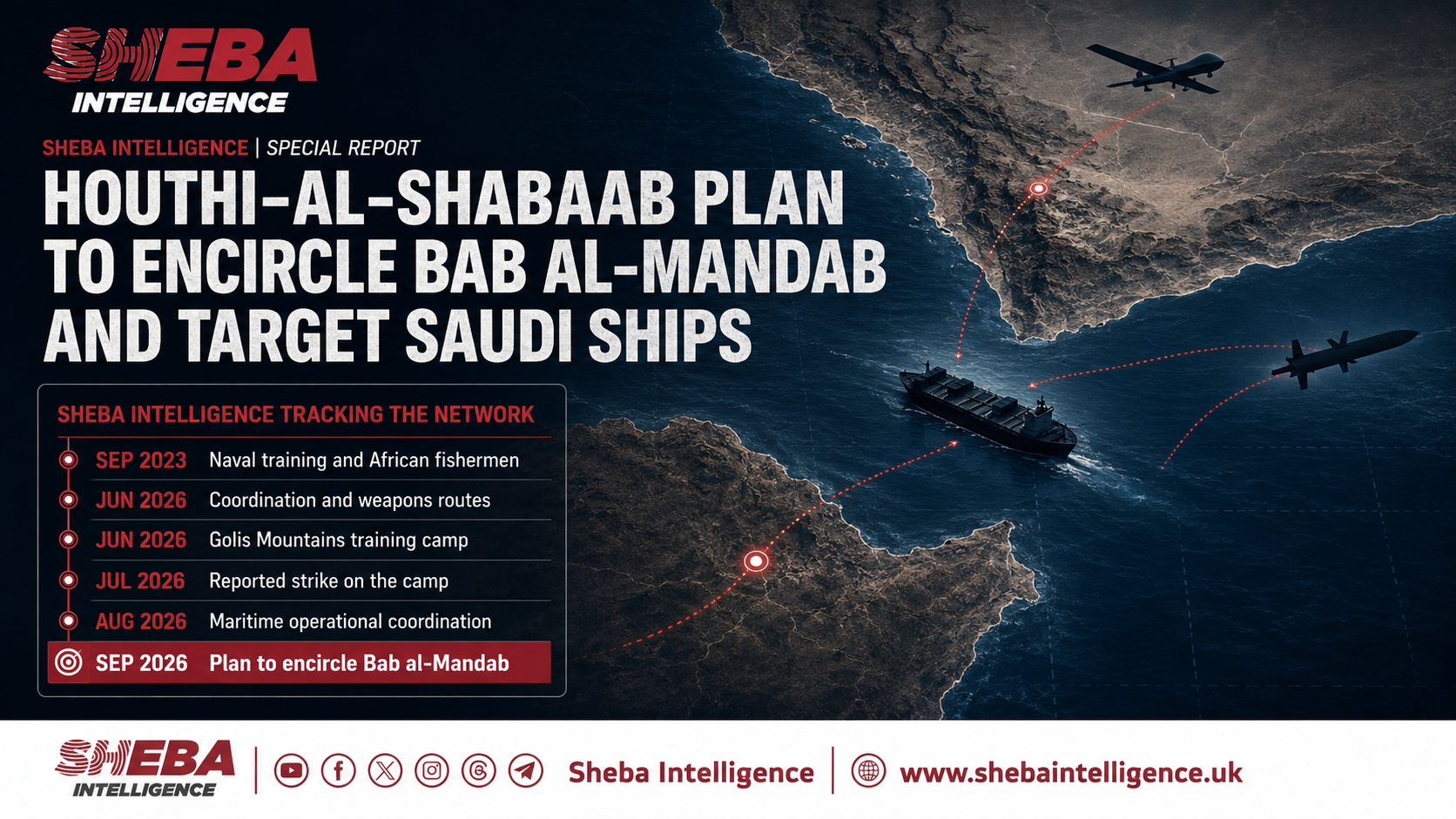
For Iran, the front provides an additional source of land-based and cross-border pressure alongside the Houthi maritime campaign around Bab al-Mandab and the Red Sea.
On July 19, Sheba Intelligence reported that a high-level meeting in Sanaa, overseen by Iran’s ambassador to the Houthi authorities, approved full military readiness and identified three priority theatres for potential escalation: Marib–Al-Jawf, Taiz–Bab al-Mandab and the Saudi border.
Those theatres later appeared within a wider plan reportedly discussed by senior Islamic Revolutionary Guard Corps commander Abdul Reza Shahlai and Houthi military leaders. The plan focused on weakening or capturing Marib, expanding the western-coast campaign toward Bab al-Mandab and retaining missile and drone capabilities near Saudi Arabia as a means of deterrence and pressure.
Earlier Warning Signs
The latest mobilisation follows several indicators of expanding Houthi drone and missile activity in Al-Jawf.
On August 19, Sheba Intelligence sources detected fixed launch platforms for one-way attack drones near Jabal Wa’ar in Al-Yatmah, alongside personnel involved in launch operations.
Five days later, Sheba Intelligence reported Houthi reinforcements moving from Al-Jawf and Nihm toward Marib as the group prepared for pressure across eastern and western fronts.
On August 29, the network reported preparations for possible drone launches from Al-Saqiyah camp and the presence of UAV specialists with the Houthi military leadership overseeing Al-Labnat. The activity was assessed as potentially linked to operations inside Al-Jawf, against Marib or toward areas near the Saudi border.
The latest deployments and government pre-emptive attacks indicate that the Marib–Al-Jawf theatre may be moving from dispersed preparations toward more direct confrontation. Whether the Houthi buildup develops into a major ground offensive remains unclear, but the movement of rocket launchers, drones and reinforcements toward Al-Rayyan suggests that Al-Jawf is becoming a more active component of the group’s wider escalation strategy.