Coalition Targets Houthi Fuel Supply Network in Yemen as Dawn of Yemen Offensive Continues
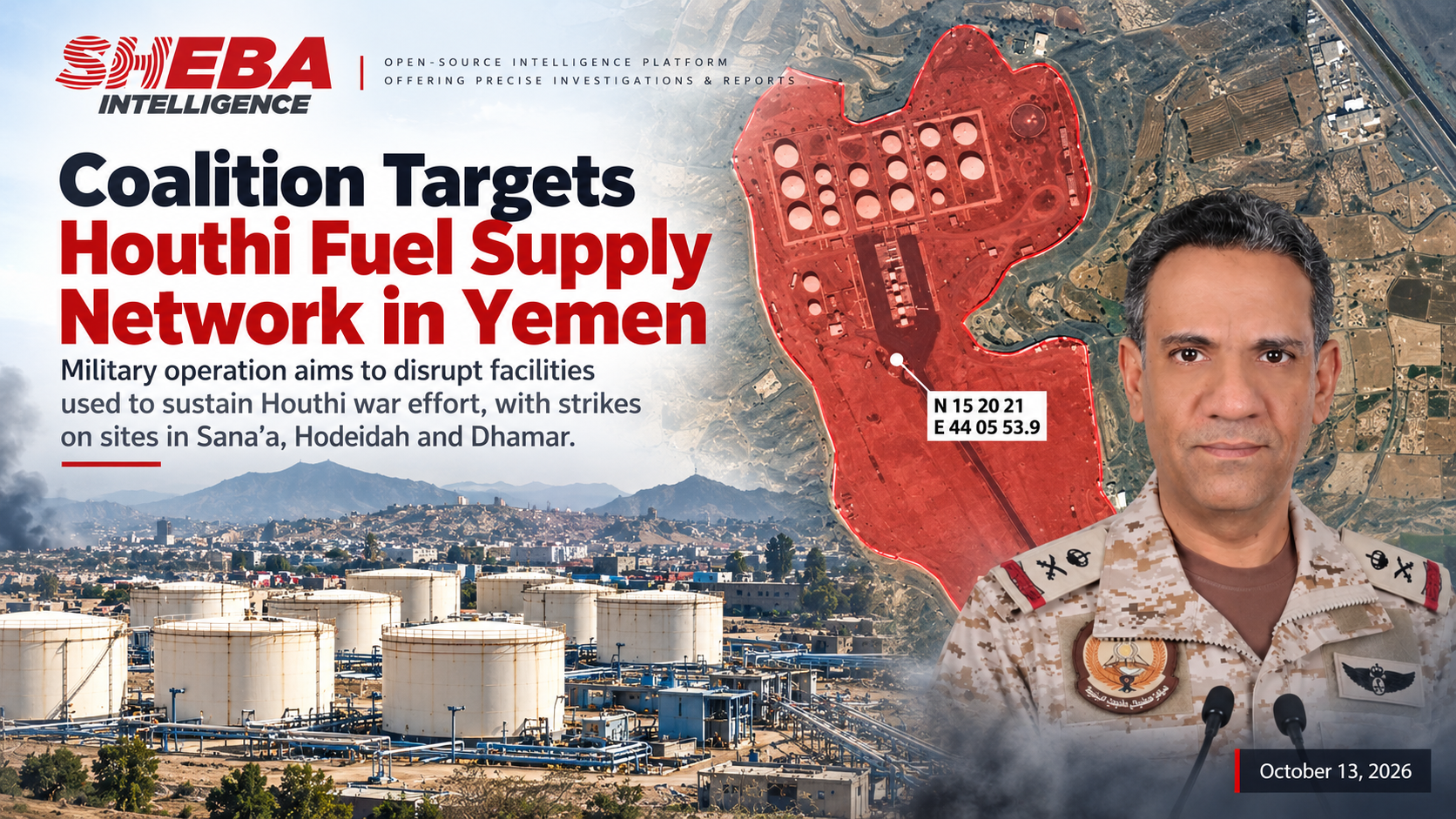
Saudi-led coalition announces a military operation targeting fuel storage facilities and distribution infrastructure in Sana’a, Hodeidah and Dhamar, seeking to disrupt Houthi military logistics amid continued attacks on Saudi Arabia and Red Sea shipping.
The Saudi-led Coalition to Support Legitimacy in Yemen announced on Tuesday a military operation targeting fuel infrastructure allegedly used by the Iran-backed Houthis to sustain their military campaign, including facilities in Sana’a, Hodeidah and Dhamar.
In an official statement, coalition spokesman Major General Turki Al-Maliki said the operation was designed to neutralize critical resources supporting Houthi military operations, particularly fuel storage and distribution networks used to sustain combat activities.
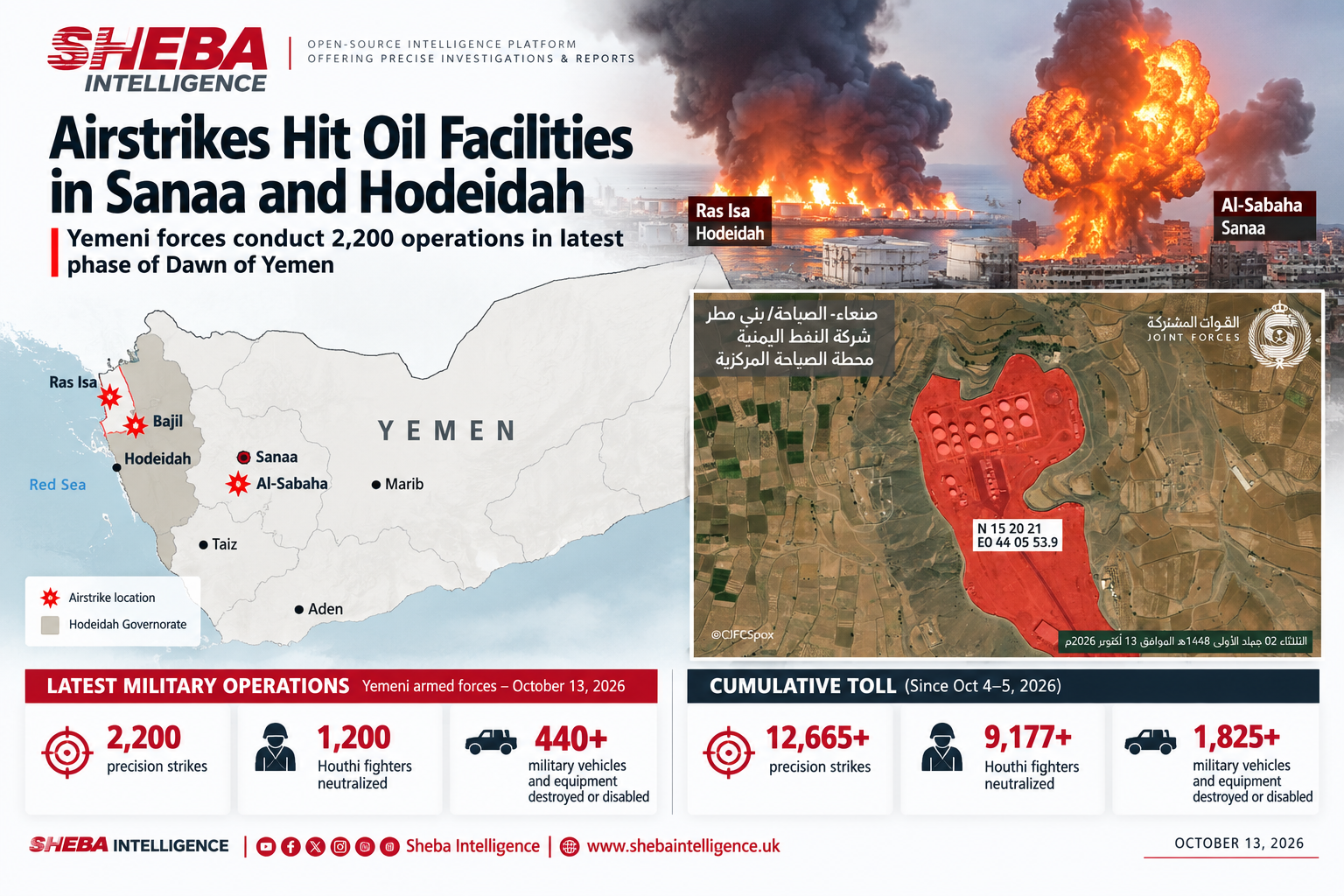
The coalition identified the Al-Sabaha Central Station in Sana’a, underground strategic fuel reserves, and fuel storage tanks and distribution facilities in Hodeidah, Sana’a and Dhamar as part of the infrastructure exploited by the Houthis.
According to the statement, these facilities have supported the group's missile and drone capabilities, which have been used to attack Saudi Arabia and threaten airports, ports and commercial vessels in the Red Sea.
Targeting the Houthi War Supply Network
The latest operation marks an expansion of coalition strikes against the logistical infrastructure sustaining Houthi military activities.
Rather than concentrating exclusively on missile launchers, drone facilities, command centers and weapons depots, the coalition is now targeting fuel resources that it says are directly supporting the group's military operations.
Disrupting these networks could affect the Houthis' ability to transport weapons, move reinforcements, operate military vehicles and maintain supply routes between their positions in northern and western Yemen.
The coalition said its operation focused on degrading Houthi capabilities used to threaten Saudi Arabia, Yemen and maritime security in the southern Red Sea.
Escalation Following Attacks on Saudi Arabia
The strikes come amid an intensifying confrontation between the Houthis and Saudi Arabia, following missile and drone attacks on Saudi airports and other civilian infrastructure, including King Khalid International Airport in Riyadh.
Earlier on Tuesday, the coalition issued an evacuation warning for civilians near the Al-Sabaha fuel facility west of Sana’a. Subsequent reports confirmed airstrikes in the area.
The Houthi-controlled Yemen Petroleum Company claimed that its Al-Sabaha facilities contained no petroleum stocks, while Houthi authorities reported casualties from a separate attack in Hodeidah. These claims have not been independently established.
Background: Dawn of Yemen Offensive
The coalition's latest operation coincides with the ongoing Dawn of Yemen offensive, launched on October 4–5 by Yemeni government forces with Saudi-led coalition support to regain territory held by the Houthis and restore state authority.
The offensive has involved extensive air and ground operations targeting Houthi fortifications, command-and-control centers, weapons depots, reinforcement routes and military equipment across several governorates.
According to previously announced Yemeni military figures, government forces have carried out more than 10,465 targeting operations since the offensive began, reporting substantial losses among Houthi personnel and military assets.
The coalition has also conducted separate operations against ballistic missile infrastructure and maritime threats, while providing continuous air support to Yemeni government forces.
The targeting of fuel infrastructure adds a logistical dimension to the campaign, potentially weakening the Houthis' ability to sustain prolonged operations and replenish frontline units.
Strategic Implications
The operation indicates that the coalition is seeking to undermine the Houthis' wider military support system rather than limiting its campaign to weapons and combat positions.
Fuel storage and distribution infrastructure plays a central role in sustaining military mobility, logistics and equipment. Disruptions could complicate Houthi operations across multiple fronts, particularly as government forces continue their offensive.
However, the military impact will depend on the extent of the damage, the availability of alternative fuel reserves and the Houthis' ability to redistribute supplies.
The operation also carries potential consequences for civilian fuel availability, particularly in areas where military and commercial distribution networks overlap.
The coalition stated that it had taken precautions consistent with international humanitarian law to avoid incidental civilian casualties and damage during the planning and execution of the operation.
The latest strikes therefore represent another stage in the confrontation, linking the Saudi-led coalition's campaign against Houthi military capabilities with the broader effort to protect Saudi territory, support Yemeni government operations and secure navigation through the Red Sea and Bab al-Mandab.
Editorial note: The figure of 10,465 operations is the previously reported cumulative total and should not be treated as an updated tally incorporating any subsequent military announcements. The October 13 coalition statement identifies facilities allegedly used for military purposes; it does not independently establish that every listed facility was struck or destroyed.