Despite Red Sea Military Escalation, Fuel Imports to Yemen's Al-Hudaydah Increase
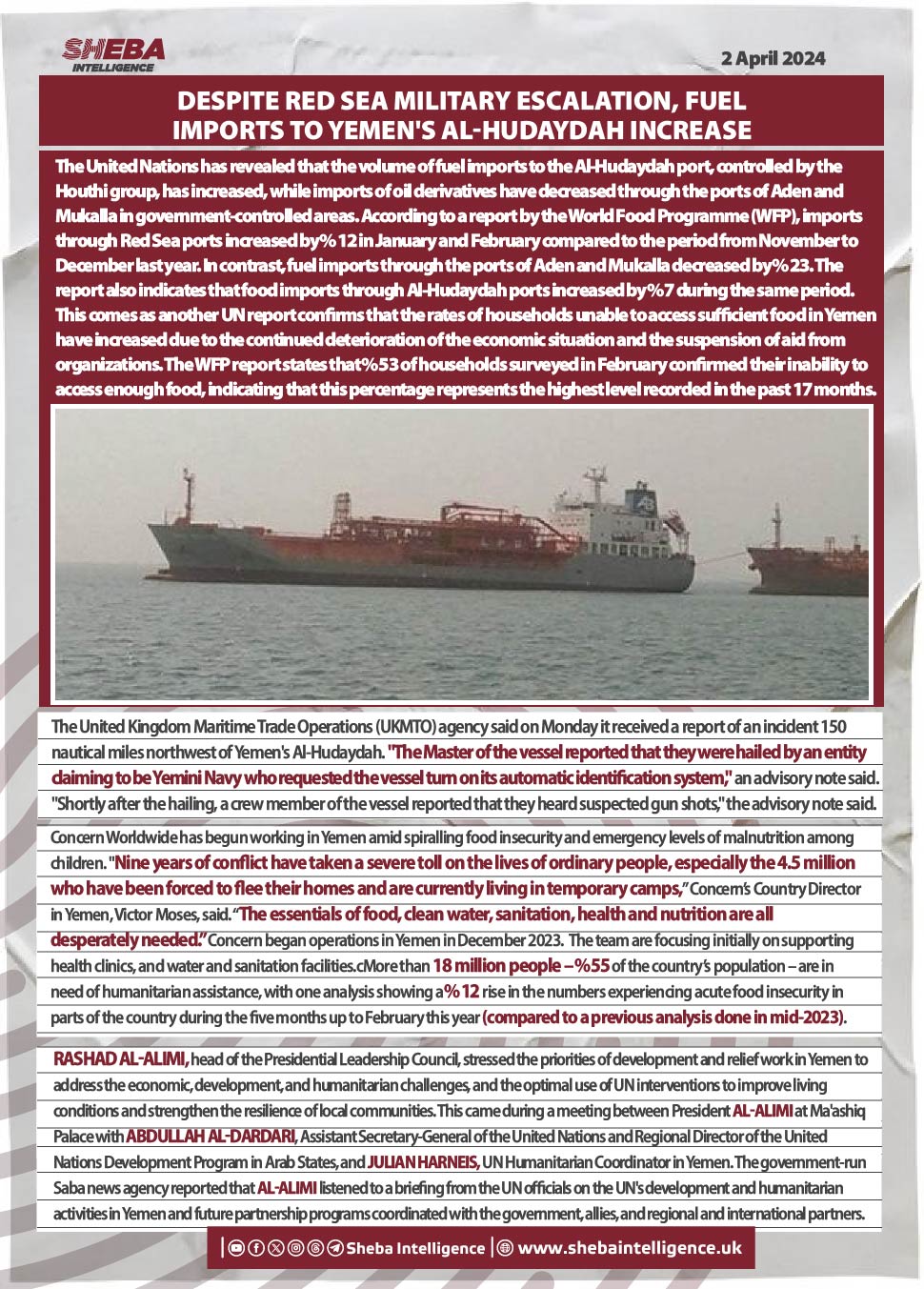
The United Nations has revealed that the volume of fuel imports to the Al-Hudaydah port, controlled by the Houthi group, has increased, while imports of oil derivatives have decreased through the ports of Aden and Mukalla in government-controlled areas. According to a report by the World Food Programme (WFP), imports through Red Sea ports increased by 12% in January and February compared to the period from November to December last year. In contrast, fuel imports through the ports of Aden and Mukalla decreased by 23%. The report also indicates that food imports through Al-Hudaydah ports increased by 7% during the same period. This comes as another UN report confirms that the rates of households unable to access sufficient food in Yemen have increased due to the continued deterioration of the economic situation and the suspension of aid from organizations. The WFP report states that 53% of households surveyed in February confirmed their inability to access enough food, indicating that this percentage represents the highest level recorded in the past 17 months.
The United Kingdom Maritime Trade Operations (UKMTO) agency said on Monday it received a report of an incident 150 nautical miles northwest of Yemen's Al-Hudaydah. "The Master of the vessel reported that they were hailed by an entity claiming to be Yemini Navy who requested the vessel turn on its automatic identification system," an advisory note said. "Shortly after the hailing, a crew member of the vessel reported that they heard suspected gun shots," the advisory note said.
Concern Worldwide has begun working in Yemen amid spiralling food insecurity and emergency levels of malnutrition among children. "Nine years of conflict have taken a severe toll on the lives of ordinary people, especially the 4.5 million who have been forced to flee their homes and are currently living in temporary camps,” Concern’s Country Director in Yemen, Victor Moses, said. “The essentials of food, clean water, sanitation, health and nutrition are all desperately needed.” Concern began operations in Yemen in December 2023. The team are focusing initially on supporting health clinics, and water and sanitation facilities.cMore than 18 million people – 55% of the country’s population – are in need of humanitarian assistance, with one analysis showing a 12% rise in the numbers experiencing acute food insecurity in parts of the country during the five months up to February this year (compared to a previous analysis done in mid-2023).
Rashad al-Alimi, head of the Presidential Leadership Council, stressed the priorities of development and relief work in Yemen to address the economic, development, and humanitarian challenges, and the optimal use of UN interventions to improve living conditions and strengthen the resilience of local communities. This came during a meeting between President al-Alimi at Ma'ashiq Palace with Abdullah al-Dardari, Assistant Secretary-General of the United Nations and Regional Director of the United Nations Development Program in Arab States, and Julian Harneis, UN Humanitarian Coordinator in Yemen. The government-run Saba news agency reported that Al-Alimi listened to a briefing from the UN officials on the UN's development and humanitarian activities in Yemen and future partnership programs coordinated with the government, allies, and regional and international partners.